LED Kitchen Lights
Kitchen lights need to work harder than most. From general ceiling illumination to focused task lighting above worktops, the right setup depends on your ceiling type, layout, and how the space gets used. Here you'll find fire rated LED downlights for plastered ceilings, GU10 spotlight fittings, mains-powered under cabinet strips, and low-voltage plinth light kits, all UK stocked.
Colour temperatures run from warm white (3000K) to natural white (4000K). Free UK delivery on orders over £50.
... Read More- Featured
- Most relevant
- Best selling
- Alphabetically, A-Z
- Alphabetically, Z-A
- Price, low to high
- Price, high to low
- Date, old to new
- Date, new to old
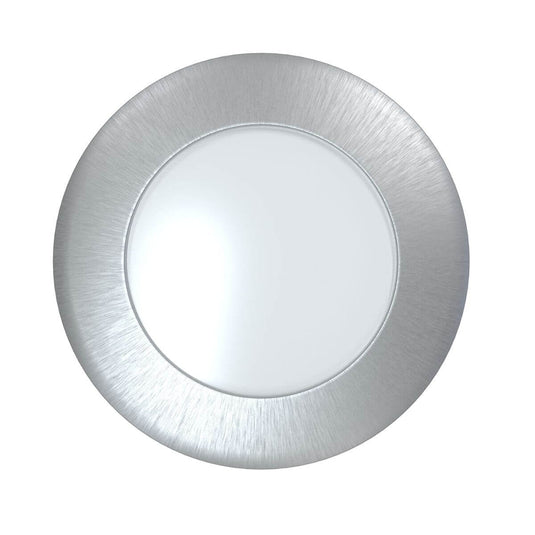
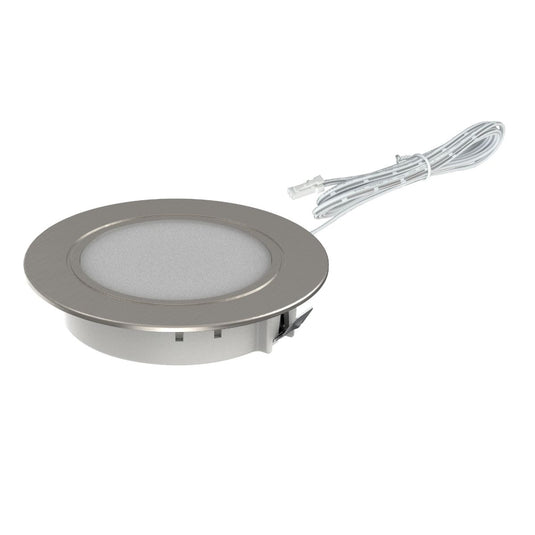
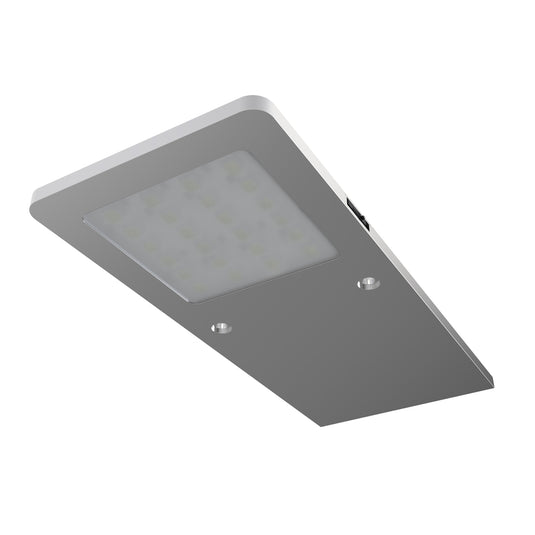
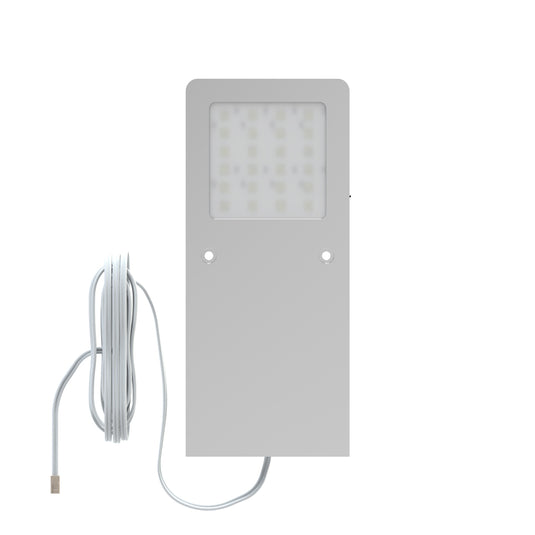
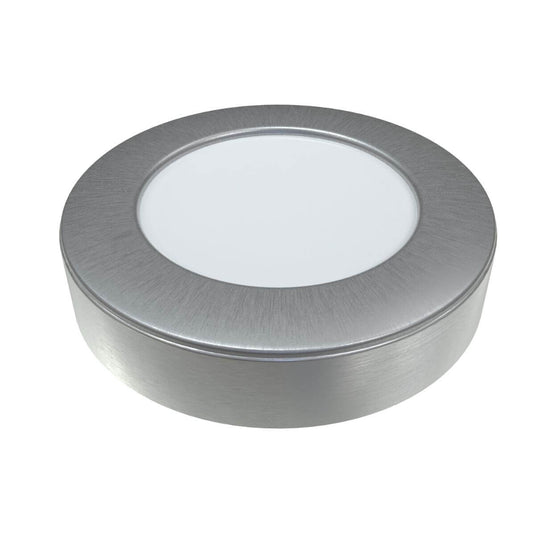
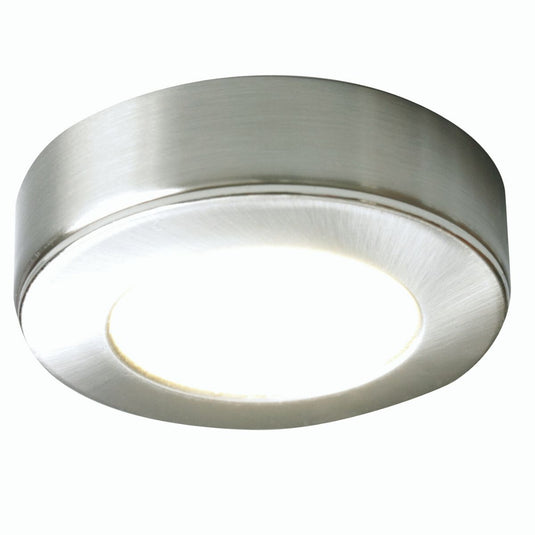


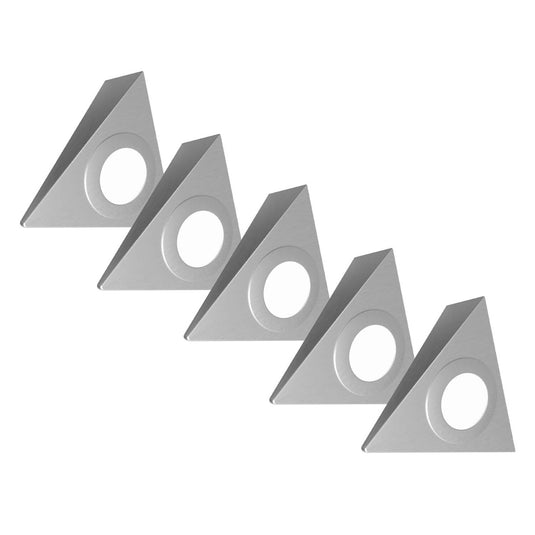
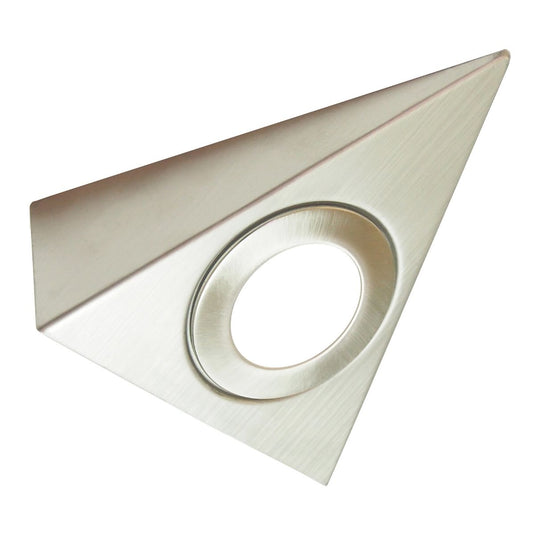
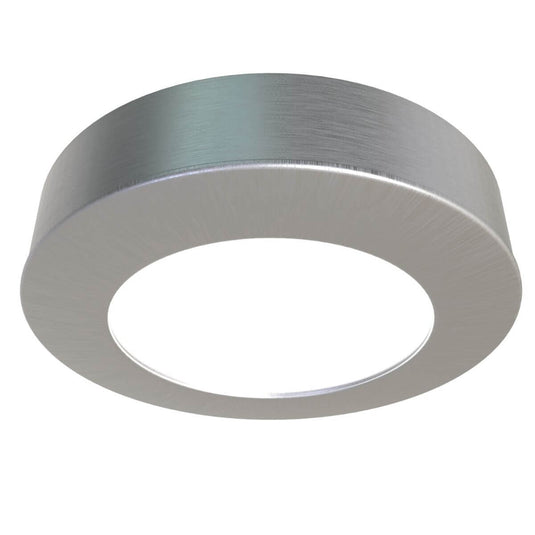
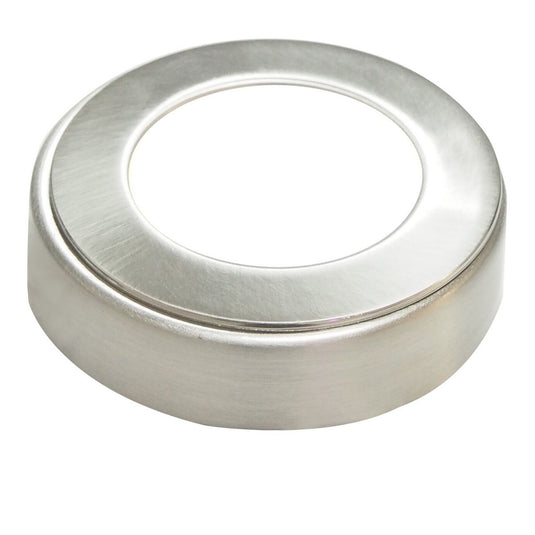
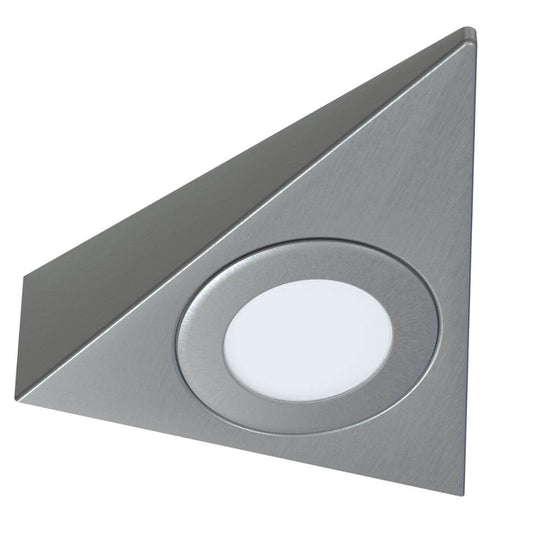
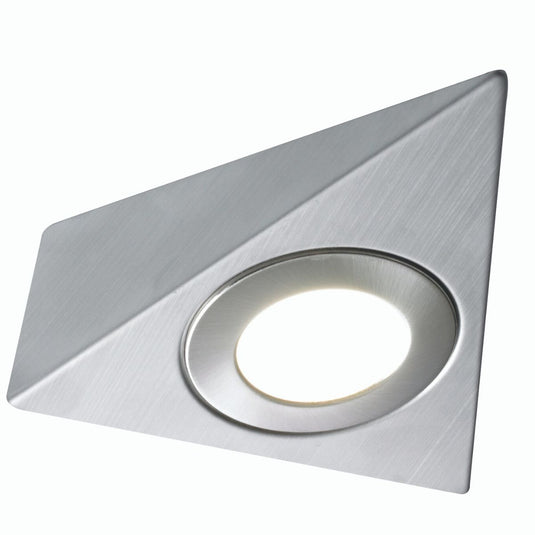



LED Kitchen Ceiling Lights
Recessed downlights are the most common choice for kitchen ceilings. If you have a plastered ceiling with a floor above, you'll need fire rated fittings. Our fire rated GU10 downlights provide either 30 or 60 minute fire resistance depending on the model, and most accept standard GU10 bulbs so replacements are straightforward. Fixed and tilt versions are available, with finishes including white, brushed chrome, polished chrome, matt black, and antique brass.
For kitchens with a plasterboard or open ceiling, standard GU10 downlights work fine. Pair any fitting with our GU10 LED bulbs, available from 4.5w to 10w and in warm white (3000K), natural white (4000K), and cool white (6000K). Most 5w GU10 bulbs produce around 400 to 500 lumens, which is plenty for a recessed fitting spaced correctly across a standard kitchen.
If you want dimming control, check that both the fitting and bulb are dimmable, and use a compatible LED dimmer. Our LED dimmers are listed with compatibility information to take the guesswork out of it.
Under Cabinet Kitchen Lights
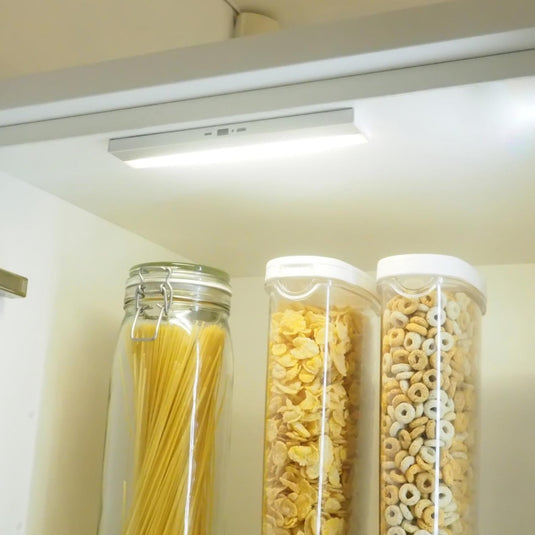
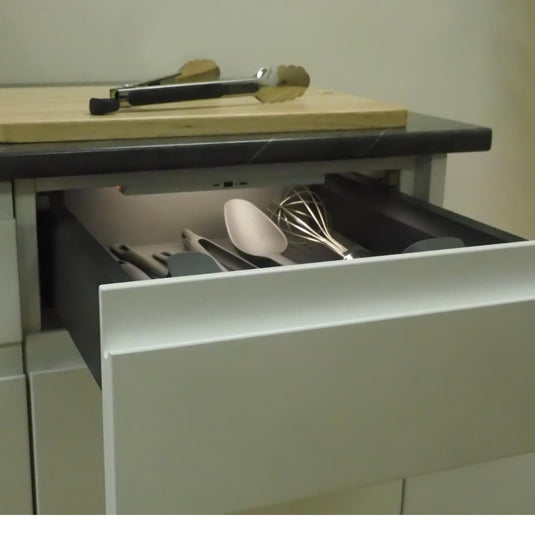
Under cabinet lights are the most practical upgrade you can make to a kitchen. They cut out shadows on the worktop that ceiling lights always create, making prep and cooking noticeably easier. We stock two main types: low-voltage 12v units running off a driver, and mains 240v fittings that wire directly into your existing supply.
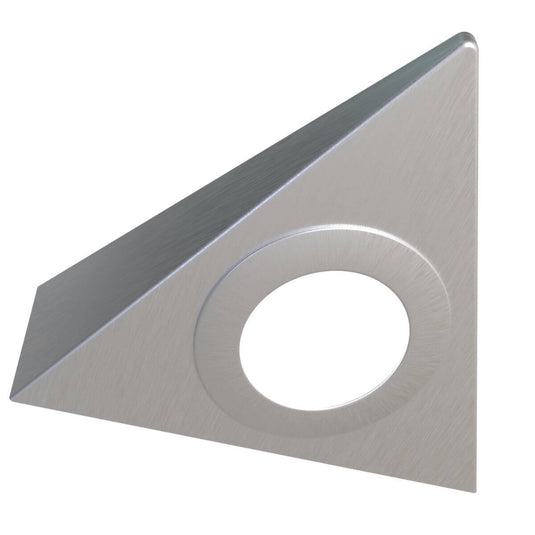
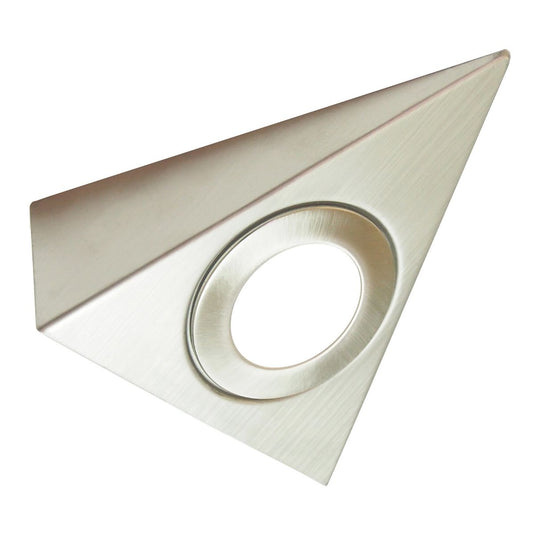
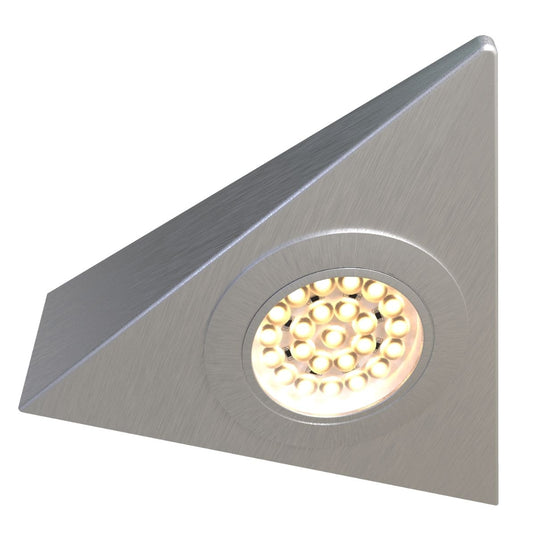
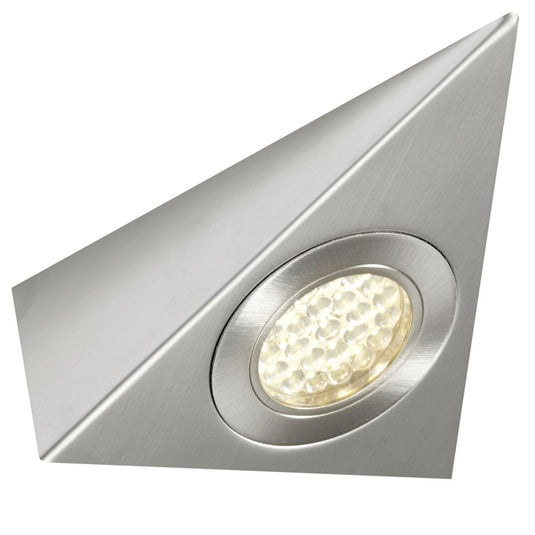
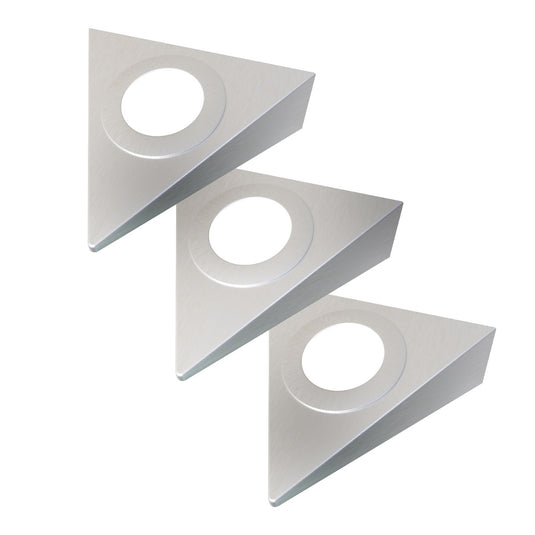
The 12v under cabinet lights come in triangle, wedge, surface mounted, and recessed styles, and can be daisy-chained together using link cables. Kits are available in packs of three and five if you're lighting a full run of cupboards. Most units are available in warm white (3000K) or cool white (6000K), with some CCT switchable models letting you choose the colour temperature after fitting.
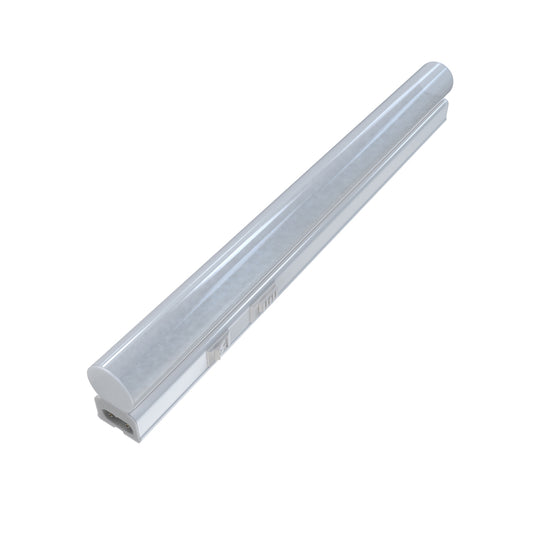
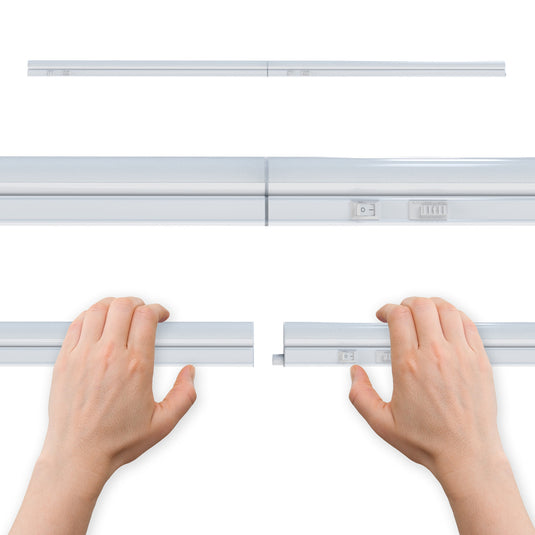
For a neater installation, our linkable T5 under cabinet lights run off 240v and connect together in a run, with a touch sensor switch available separately. These suit kitchens where running a low-voltage driver isn't practical. Browse the full range in our under cabinet lighting collection.
240V Mains Under Cabinet Lighting
If you prefer to avoid transformers and drivers, 240v mains under cabinet lights are the simpler option for most electricians. Our 240v triangle and surface mounted units wire straight off a spur and need no separate power supply. The linkable T5 fitting is the most popular choice here, available in 343mm, 525mm, and 904mm lengths so you can cover different cabinet widths without cutting. It's CCT switchable between warm white (3000K) and natural white (4000K) on the unit itself.
If you're running a longer linked run or mixing unit sizes, use our link lead cables to connect them cleanly. A touch sensor switch makes the whole system easy to operate without a wall switch. For more on how these systems work, take a look at our blog post on how under cabinet LED lights work.
Kitchen Plinth Lights
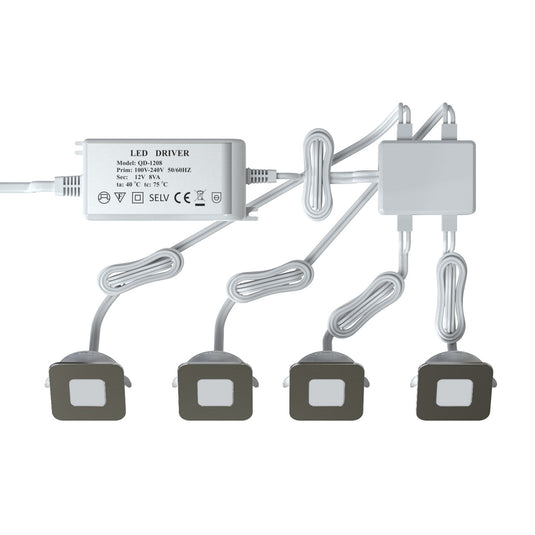
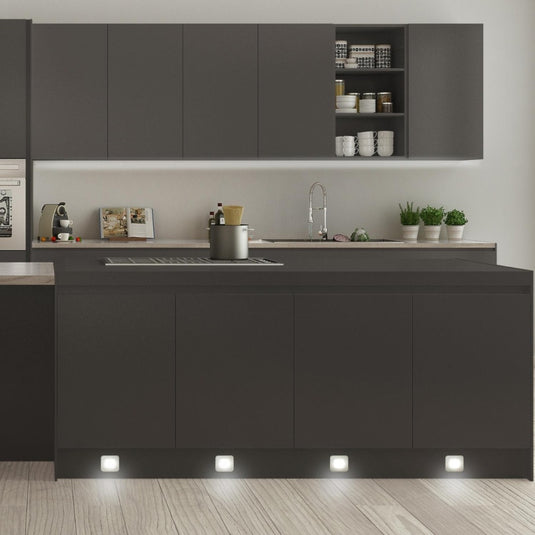
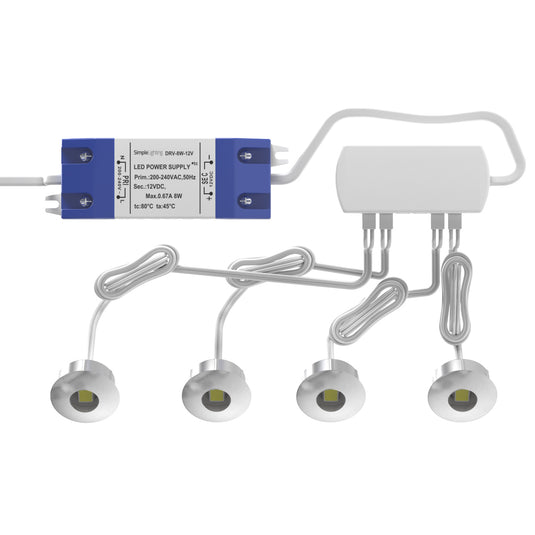
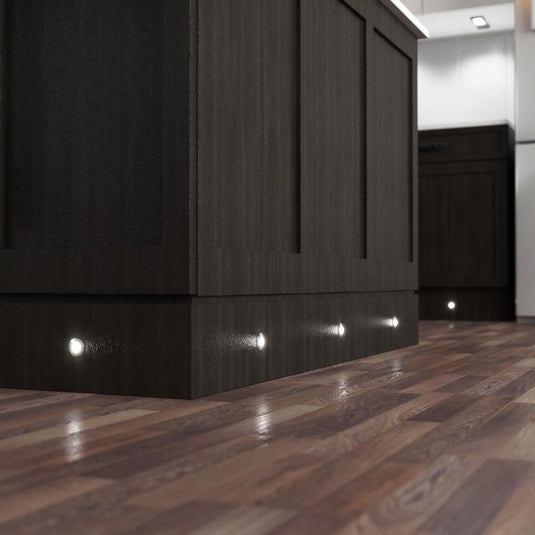
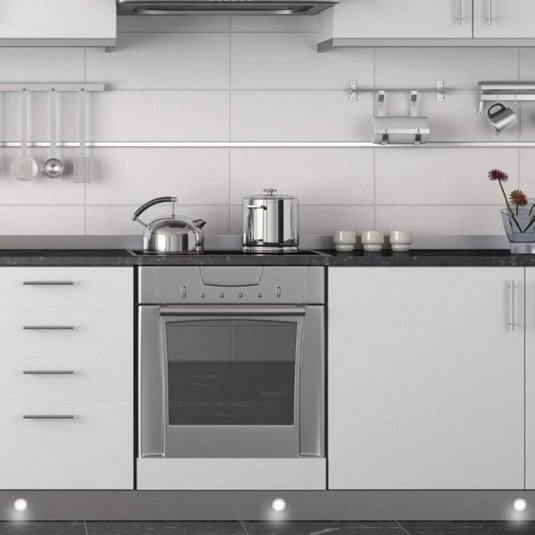
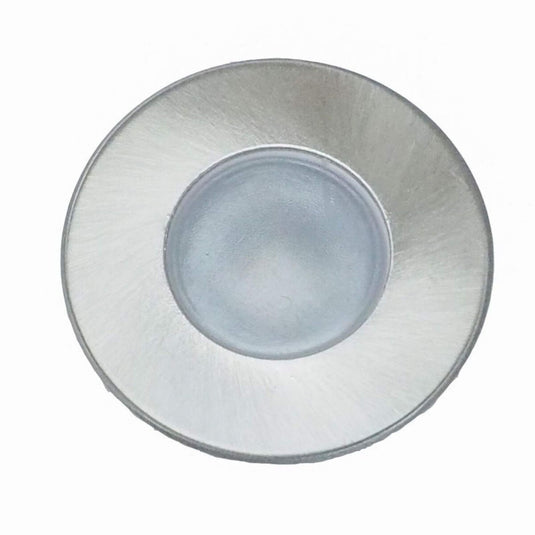
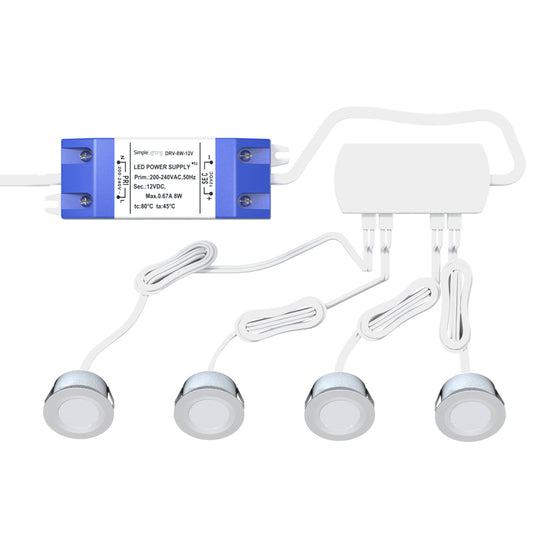
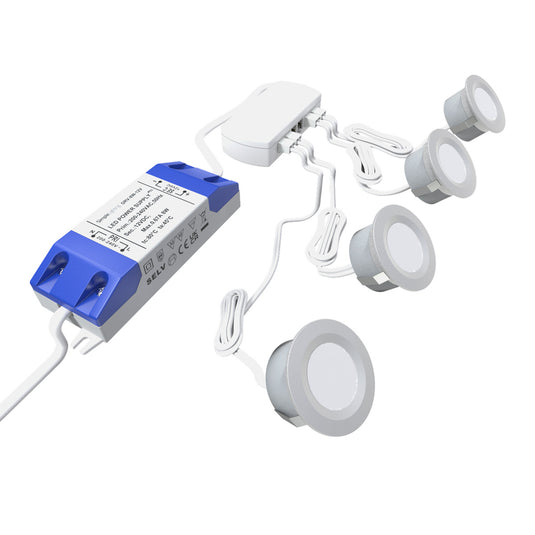
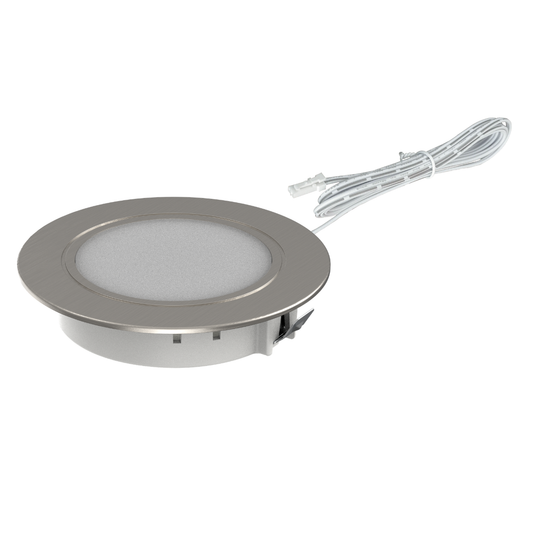
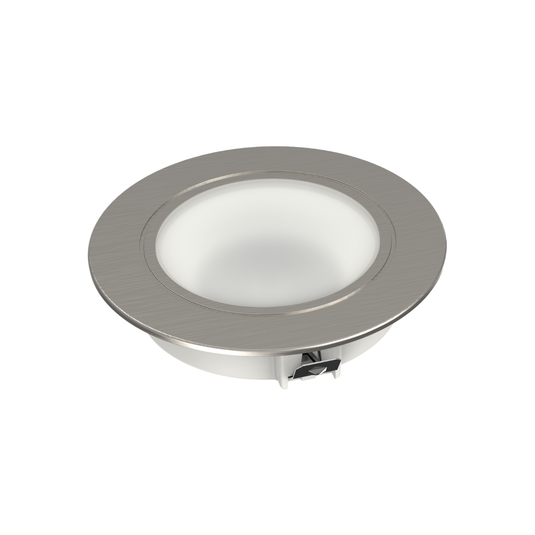
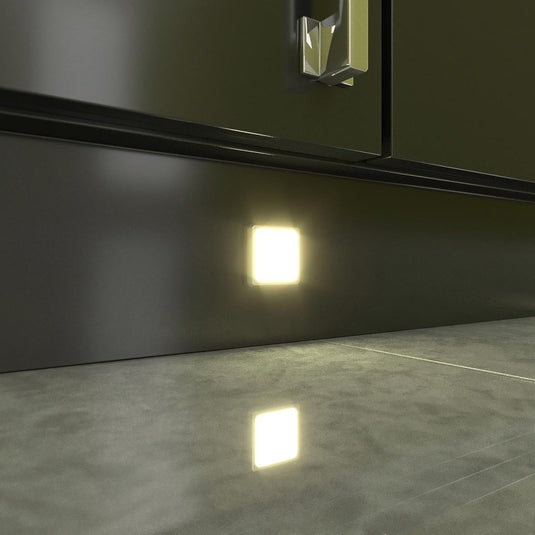
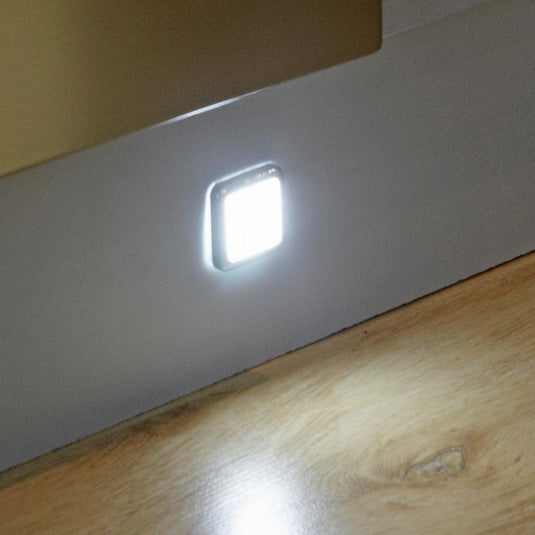
Plinth lights fit into the kickboard at the base of your kitchen units and add low-level accent lighting that works well in open-plan spaces. Our kits come in packs of four, in both round and square styles. The 12v versions need an LED driver, and we stock 15w and 20w drivers with a 6-way distributor to run multiple lights off a single power supply.
Most plinth light kits include the driver and all necessary cables. Square and round options are available in warm white (3000K) and natural white (4000K). If you're unsure which style suits your kitchen, read our guide on what kitchen plinth lights are or check out the full plinth lights collection.
Choosing the Right Colour Temperature for Kitchen Lighting
Colour temperature affects how a kitchen feels to work in. Warm white (3000K) gives a relaxed, slightly golden tone that suits traditional kitchens and open-plan living areas where the kitchen flows into a dining or sitting room. Natural white (4000K) is a clean, neutral light that's more clinical and better suited to modern or high-gloss kitchens where you want everything to look sharp.
Cool white (6000K) is rarely used in domestic kitchens because it can feel harsh, though it's common in commercial kitchen environments. For most homes, 3000K or 4000K is the right call. If you're not sure, some of our fittings and bulbs are CCT switchable, meaning you can toggle between colour temperatures after installation without changing the fitting. Our blog on kitchen lighting design covers this in more detail.
Buying Guide: What to Consider for LED Kitchen Lighting
Before you buy, check whether your kitchen ceiling is fire rated. If there's a habitable room above, you need fire rated downlights. Standard IP20 models are fine for most kitchens, but if you're fitting above a sink or hob, choose IP65 rated fittings (dust-tight and protected against water jets). We stock IP65 fire rated downlights in white, brushed chrome, and black bezels.
For under cabinet and plinth lights, decide early whether you want 12v or 240v. Low-voltage 12v systems give you more flexibility with positioning and are easier to run neatly, but need a driver. Mains 240v systems are simpler to wire for a qualified electrician and need no extra components. If you're planning a kitchen strip light install with LED tape in aluminium profiles, our aluminium LED profiles are worth looking at for a clean, diffused finish. For inspiration on placement, our guide on best places to install LED strip lights in a kitchen is a good starting point.
Frequently Asked Questions
How many lumens do I need for kitchen ceiling lights?
A general rule for kitchens is around 300 to 500 lumens per square metre. For a 15 square metre kitchen, that's roughly 4,500 to 7,500 lumens total from your ceiling lights. A 5w GU10 LED bulb typically produces around 400 to 500 lumens, so eight to twelve downlights spaced evenly across the ceiling will cover most kitchens. Under cabinet lights add task lighting on top of this and don't need to be factored into your ceiling calculation.
Do I need fire rated downlights in my kitchen?
If there's a room above your kitchen ceiling, yes. Building regulations require fire rated downlights wherever there's a habitable space above, to maintain the fire separation between floors. Our fire rated GU10 downlights provide 30 or 60 minutes of fire resistance. If your kitchen is on the top floor with a loft above, standard non-fire-rated downlights are acceptable, though fire rated fittings are often fitted anyway as standard practice.
What is the best colour temperature for kitchen lights?
Most people choose natural white (4000K) or warm white (3000K) for kitchens. Natural white (4000K) gives a clean, neutral light that suits modern kitchens and makes colours look accurate on worktops. Warm white (3000K) is softer and works better in traditional kitchens or where the kitchen connects to a dining or living area. Avoid cool white (6000K) in domestic settings as it tends to feel harsh. If you're unsure, look for CCT switchable fittings that let you change the colour temperature after installation.
Can I use LED strip lights under kitchen cupboards?
Yes, and it's one of the most effective kitchen lighting upgrades you can make. LED tape in an aluminium profile gives a continuous line of diffused light with no hot spots. You'll need to calculate the wattage per metre and match it to a compatible LED driver, or choose a plug-in kit for a simpler setup. Alternatively, our discrete under cabinet puck and bar lights are quicker to install and come in mains 240v versions that don't need a separate driver.
Are kitchen plinth lights hard to install?
Not particularly. The main job is cutting the apertures into your kickboards, which requires a hole saw or jigsaw depending on the fitting shape. The 12v plinth light kits include a driver and distributor, so all the wiring runs off a single power supply that you connect to a spur. Round and square kits are available, and the fitting depth is typically 11mm to 15mm, which fits most standard kitchen kickboards. If you're not confident with electrics, a qualified electrician can fit a full four-light kit in under an hour.
Do under cabinet kitchen lights need a transformer?
It depends on the type you choose. Low-voltage 12v under cabinet lights run off a driver or transformer, which you mount inside a cabinet. Mains 240v under cabinet lights wire directly into your household supply with no driver needed. Our 240v surface mounted and T5 linkable under cabinet lights are the simplest option if you want to avoid a driver entirely. If you already have a 12v driver installed from a previous system, the 12v puck lights are easy to add onto an existing circuit.